How to Protect Your Privacy
Why privacy matters and how to reclaim it
 Simon SomlaiPublished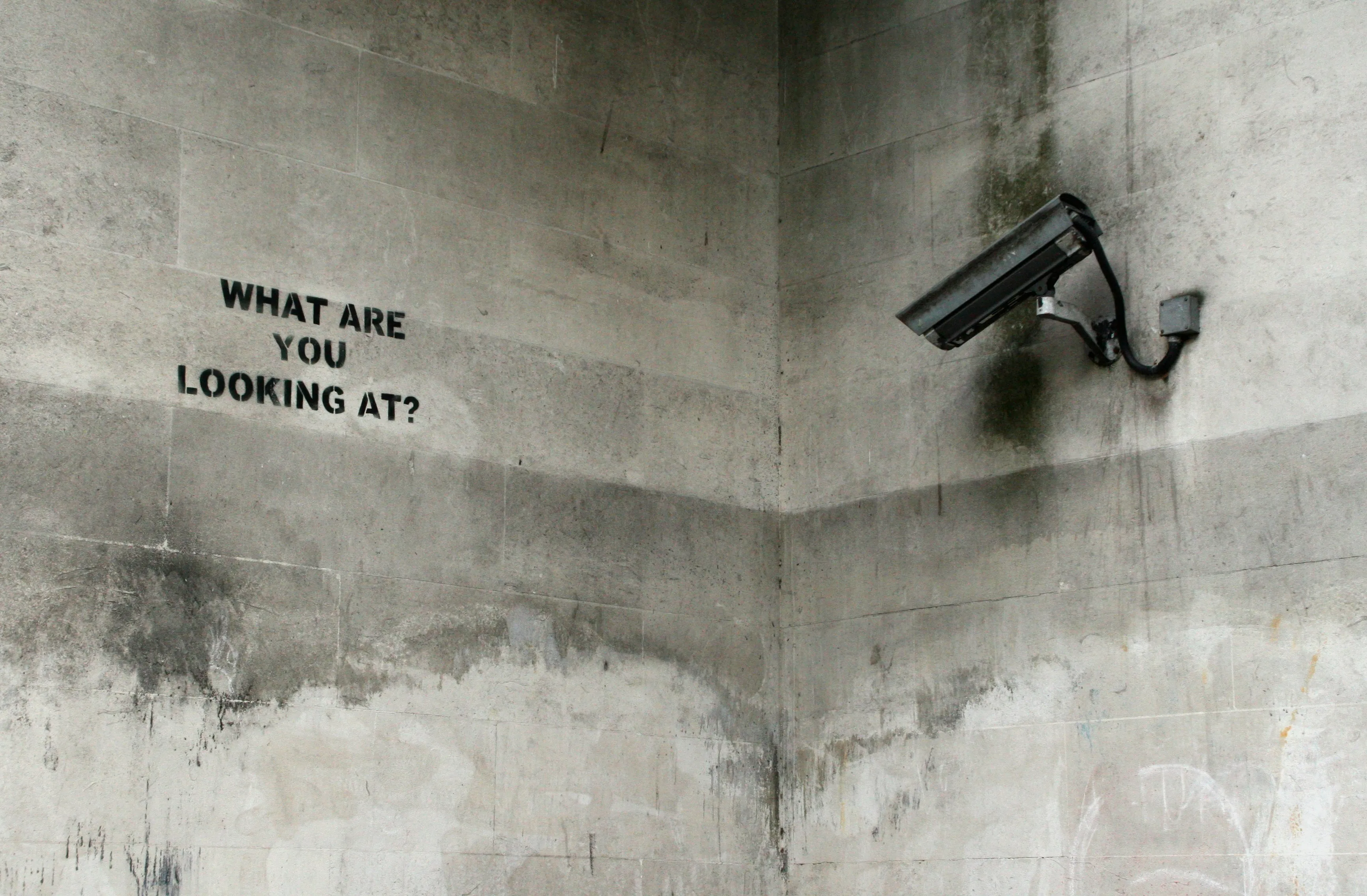
Are you a criminal?
If not, please reply with;
- your net-worth and home address
- your email account and password
- The full names and pictures of your children
If not, you must have something to hide then - and by extension you're a criminal!
Sounds stupid? Well, this is the most-used argument against privacy.
That "you don't need privacy if you have nothing to hide". That all information that is private MUST be criminal.
But if we take the above examples - that's clearly not true.
We all have legal information (bank accounts, home addresses, physical location) that we don't share with everyone because it can cause physical danger, cause reputation damage, harm you financially or be used to manipulate/repress you if it falls in the wrong hands.
Privacy, fundamentally, is about being able to choose which personal data is stored and who this information is shared with.
Yet these days, we don't really get a say.
Yes, there are regulations like GDPR (which are a good thing). But data-leaks still happen, and it's often impossible to enforce a law like this top-down for everyone involved, especially across countries.
And even then, who guards the guardians?
If you read the Snowden revelations12 or watch documentaries like Inside Job3, Social Dilemma4 or Why We Fight5, you realize that internal oversight often fails.
Too often, both companies and governments act against the public interest behind closed doors and when caught, can't be held accountable. Especially when it comes to something as invisible as our privacy.
There ultimately is one design defect, both in technology and in people. The people who create the rules have no incentive to act against themselves. - Edward Snowden, Permanent Record
The best way to protect your information (and yourself) is to not rely on the kindness of these strangers. But take matters in your own hands. By:
- Not generating these data points in the first place
- Remove them where they exist
- Use apps, services and tools that respect you and your privacy
What is captured?
Privacy is not a black and white thing. It's a slider where you become "more" or "less" private. You consciously take small steps towards better privacy, improving society one click at a time.
And this all starts with awareness.
To have the knowledge which data points are captured about you, and then decide for yourself the trade-offs you're willing to make.
Some data is worth giving up, in return for better service. The key is about knowing when this happens and the choices you have.
Here are some examples:
- Your location: Your phone location is collected by cell towers and apps at most moments in the day (think Waze, Google Maps, Facebook, Instagram, your phone provider). Even if not in use or in flight mode6
- Your purchases: Every digital purchase you make is stored by your bank, merchant (Amazon, eBay), payment processor (Visa, Mastercard, PayPal). The where, when and how is used to make internal decisions
- You online activity: Browsers and websites store everything you search for on the internet, including the time and location you do this.
- Your voice: Always-on smart devices like Alexa and Google Assistant are constantly listening and recording7 (unlike phones) and storing this information.
- Your messages and calls: Whilst the audio and content of mobile communication is not kept, the metadata is stored (phone numbers, time and date, duration, location).
- Your car movements: The movement, direction, license plate, make, model, (political) stickers, and color of your car when driving is stored and searchable by automatic license plate recording camera’s (ALPR-camera’s)8. In countries where the license plate is tied to a person, this equals personal surveillance. Most modern cars itself also have sim cards which collect location information, diagnostics, braking patterns and driving habits (including the time and places you stop) which is then sold to insurance companies and advertisement agencies.
- Your face: Facial recognition camera’s in public spaces record and analyze your location, identity, time of passing, gait, objects carried, people you meet, tattoos you have, clothes you wear. Leading eventually to a surveillance society, like in China9
Much of this information is accessible to low-level employees or is sold to the highest bidder. Law enforcement can ask for it without needing a warrant or court-order.
In a society like this, what freedom is left to say what you think without persecution, to disagree with an unjust law or attend protests/political rallies?
This happens only in dictatorships or banana republics right?
- Like Canada, where your bank gets frozen for your political views or attending the “wrong” protest10
- Or the US, where government pressured banks to debank the cryptocurrency industry11 without going through a court.
- The EU “Chat Control” proposal (https://www.chatcontrol.eu/) to enable scanning of ALL communication.12
If you read this, it might feel like the war on privacy is already lost. But nothing could be further from the truth.
Privacy adoption is rising1314, the tools we have are better and easier than ever (and rapidly improving due to AI) and through (uncensorable) social media, information is more accessible, abundant and spreads more rapidly than ever before.
In short, it's still the best time to reclaim your data, since most of the changes are really easy to make.
Privacy Checklist
Here's a checklist of varying difficulties of what you can do;
Easy
-
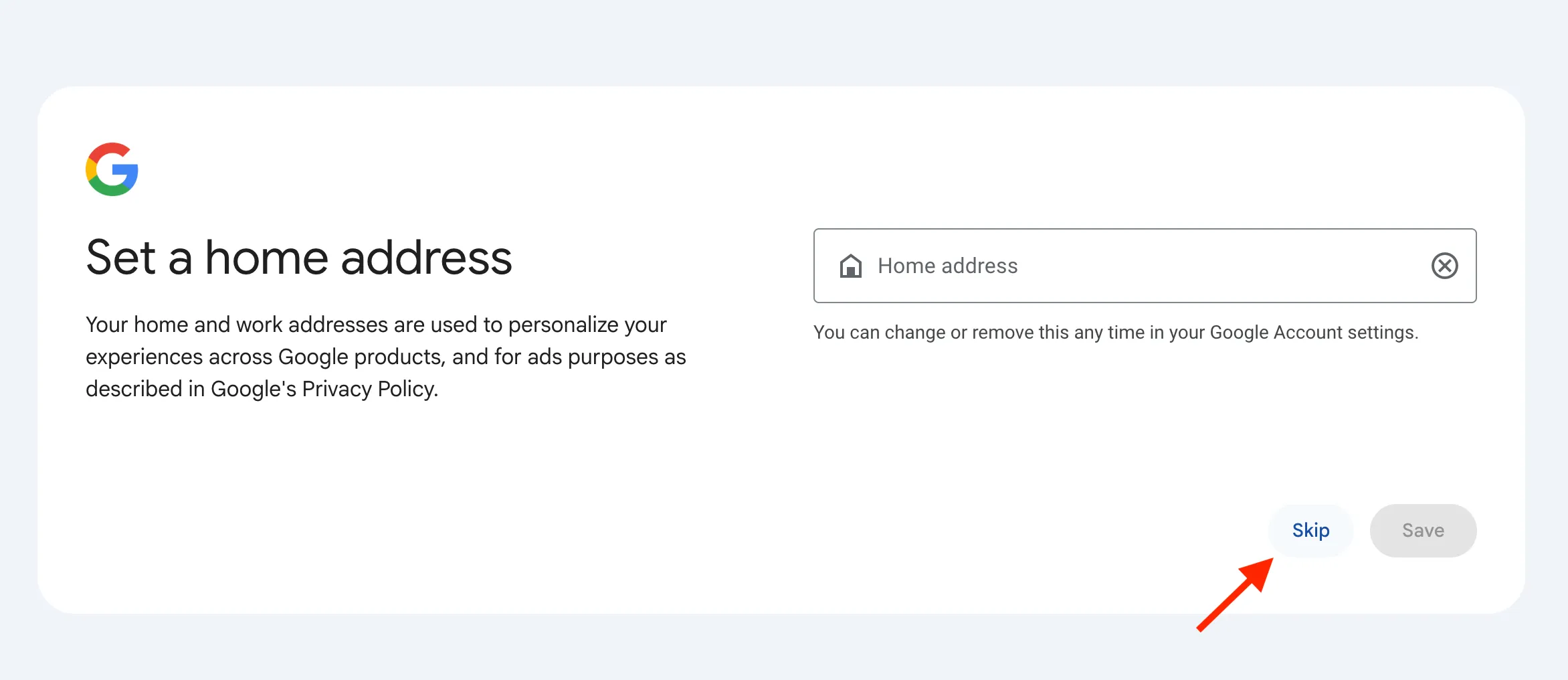
Always provide as little information as possible online. Only fill in data when it's legally required. Use your middle name instead of last name, a temporary email or fake phone number. Mass data collection is not in your best interest. It's what fuels spam, scams and ads. Leave blanks when possible.
-
Restrict your social media profiles to private/close friends and limit the personal information you share online
-
Switch to using Brave as browser and search engine instead of Google Chrome. It's the exact same functionality without the monitoring.
-
Don't use SMS for communication. Anyone can read this.
-
Encrypt your WhatsApp backups, so Facebook can't read all your messages. See https://ssd.eff.org/module/how-to-use-whatsapp#enable-end-to-end-encryption-on-backups
-
Use a password manager and generator like Bitwarden, 1pass or Proton pass. Ensure the passwords for your most important accounts (email, finance, social media) are difficult.
-
Your phone is often your weakest link. Ensure you optimize it's settings;
-
Install uBlock Origin to block trackers, ads and analytics
-
Don't carry your phone everywhere. This has more benefits apart from the privacy ones.
-
Limit the apps you install, limit permissions you grant to them, and remove the ones you don't use. Permissions are only needed when using the app. Especially your location settings.
-
Deny all cookies by default
-
Use a VPN like NordVPN, surfshark, ProtonVPN, Mullvad when browsing.
-
Save and spend in a private, permissionless form of money (precious metals, cash, bitcoin, monero)
-
Speak out against invasions of privacy or censorship
Medium
- Google and Microsoft read all your email. Switch to a private email service like Proton Mail or Tutanota. Especially when you're getting a lot of spam it's a good time to switch.
- Use one-time email addresses with SimpleLogin for each purchase or sign-up. In the event of a hack or data-breach, you can just delete it.
- Switch to a primary email account that doesn't have your full name in it.
- Change your phone number if you've never done it before. It's probably in some scammers' database.
- Switch to an encrypted messaging service like Signal or SimpleX
- Use cash payments when possible
- Use a password for locking your devices. Fingerprints and face scans are convenient, but easy to bypass.
- Google yourself and delete all information you don't want public
- Switch to an AI model that doesn't store and process all your data (like venice.ai or lumo). If the head of the NSA is on the boards' company, you can bet privacy is minimal15
- Replace Google Cloud with Proton Cloud products
Hard
- Install Graphene OS on your phone. It's best-in-class if you want privacy for your phone.
- Use your own router like the Flint that is able to block all ads and tracking
- Self-host your own tools (using pikapods.com)
- Run decentralized nodes
Further reading
- https://techlore.tech/goincognito.html
- https://thenewoil.org/
- https://www.reddit.com/r/privacy/comments/2byg94/the_ultimate_privacy_guide/
- https://www.privacyguides.org/
- https://www.privacytools.io/
- https://www.eff.org/ and https://ssd.eff.org/
- Watchman privacy podcast
- More in-depth: https://www.youtube.com/watch?v=i0IfCfhOHN4
Conclusion
Privacy is normal. It’s the reason we have locks, bathroom stall doors and curtains. Privacy is the final guard against unchecked power.
But it will not be given, it has to be taken.
Every day you vote for the future you want to live in and your actions matter. In the end, it's the only thing you have control over and the only thing that has ever changed anything in society.
Maybe your ballot goes unheard.
But what you say, what you condemn, what work you do, what you buy, who you buy from, where you live, what apps you use, what news you watch, what money you hold, what places you visit - These all cast votes.
- When you choose an encrypted app, you vote for a future where communication is private.
- When you buy a phone or car that doesn’t track you. You vote for a future where devices act in your best-interest.
- When you save in permissionless, private currencies, you vote for a system without surveillance and censorship. You don’t protest the system, you simply leave it.
The war on privacy is only lost if everyone surrenders willingly. Don’t underestimate your vote.
What future will you vote for today?
What future will you live in if you don’t vote?
Footnotes
-
https://www.nytimes.com/interactive/2018/12/10/business/location-data-privacy-apps.html ↩
-
https://www.nytimes.com/2022/02/22/world/americas/canada-protest-finances.html ↩
-
https://financialservices.house.gov/news/documentsingle.aspx?DocumentID=409457 ↩
-
https://comparecheapssl.com/vpn-usage-statistics-and-trends-what-the-data-reveals/ ↩
-
https://outbyte.com/blog/vpn-usage-trends-2025-which-countries-lead-in-vpn-adoption/ ↩
-
https://www.theverge.com/2024/6/13/24178079/openai-board-paul-nakasone-nsa-safety ↩
Get new articles by email
Free on Substack. Unsubscribe anytime.
You'll confirm on Substack, in a new tab.
Related articles
All articles » Jun 09, 2026
On the History and Future of Money
Where we've come from, where we are and where we're headed.
 May 25, 2025
30 Tips From a 30 Year Old
A compilation of tips from the wise 30-year old Simon for the naive 20-year old Simon. Not that I would've listened to any of it..
 Jul 22, 2025
How to Get a VOIP Number in Europe
I spent a few days looking into how to get a VOIP number in Europe and it wasn't as easy as I thought. That's why I created this article to help people who run into the same problem.
 Jun 26, 2025
Housing Is Broken
I spent 2.5 years renovating a house thinking it was smart. Here's my take and what you should do instead.
 Nov 27, 2024
How to Simplify Your Life
Life can be pretty simple, it's just that we insist on making it more complex than it needs to be. Here's a list of things to ponder and actions to take when trying to cut loose unnecessary baggage.
 Jun 08, 2024
Maximize Your Kobo E-Reader: RSS Integration, Calibre-Web, Custom Screensavers, and AI Integration
Discover how to unlock the full potential of your Kobo e-reader by integrating it with RSS feeds, Calibre-web, custom screensavers, and AI.
Comments/Questions